Beth. My last flight of the day, I sat next to Beth. She was on the heavier side, black hair, and giggly. She admitted to me (in confidence?) that she was drunk and always gravitated to he bars in airports. She was probably in her mid to late thirties, single and doubly employed. Her first job was in HR for a municipality of a suburb of Phoenix. Her second job was with Lowes--which went hand in hand with how she spent all her free time as repairing the townhouse she lives in.
She used to work in database management, but hated it. A friend of hers worked there and used to tell her all about it, so she knew the lingo but didn't have a clue about what was actually going on. When her friend left the company, she recommended Beth, and since she didn't have a job at the time, she took it. The first few years she squeaked by with questions like, "How would you go about doing this?" Making it up day by day and slowly learning what to do.
Eventually she go a job consistent with her degree--HR. Beth loves working in HR, despite the bizarre problems that come up: "You were supposed to be out checking meters, but instead you were at home watching television and screwing your neighbor's wife. Now you're being fired, I can't help you, you brought this on yourself." Makes me glad for my job.
Government work doesn't pay well, but the benefits are good. Her second job is at Lowes, where the work is light and enjoyable. I didn't have he heart to tell her I was a Home Depot fan.
Working on her house takes all her spare time--all her discounted supplies and information come from her work at Lowes. Recently when she pulled up the old carpet (blue-green, her sister is an interior decorator and she learned how to see slight color variation while mixing paints at Lowes), she found a fuzzy cylinder embedded lengthwise in the concrete. She pulled it out and identified it as a construction worker's cigarette butt.
She talked the entire flight sans bathroom breaks, but those are the highlights.
Thursday, August 9, 2012

Tuesday, August 7, 2012
Travel Personalities (2 of 3)
Robert. On my trip back to Cedar Rapids, I met Robert in the boarding line of one of my flights. In his early forties, Robert ran his own successful business (of which he was extremely vague). He seemed like the kind of guy who could find opportunity in anything. When I told him that I might be able to work in India in a software project lead role, he was ecstatic, "Think of the marketability that would give you," he said, "so many companies here in America would like to move software to India, but they don't have the contacts or project oversight to make sure it's getting done on time and that it's right." We spent a couple minutes discussing what that kind of small business would look like as we walked down the jet bridge.
He sat across the isle from me and began a conversation with the woman next to him. Most of the flight, he spent working through a Kaplin University course book, "just to clarify some of the things I already learned in the school of hard knocks."
Jonathan. While Robert studied and chatted with the lady on his right, I introduced myself to Jonathan. He was an older gentleman, not to recently retired from many years as a forklift (and other large equipment) salesman in the midwest. He met his second wife in Las Vegas and moved to Costa Mesa, CA, after he divorced his first wife.
He was on his way to St. Louis to his niece's wedding. He hadn't seen his family in 8 years.
Emily. Throughout the flight (as I talked with Jonathan and Robert), a young blond girl sat by the window next to Jonathan. About every 10 minutes she should reposition for another 10 minutes of restless sleep. As we began our decent, she sat up and joined in the conversation.
Emily was in her early twenties and engaged to be married. She apparently enjoyed trying to sleep the whole flight. Recently she went on a missions trip to India to spend time with college students since most short-term missions are focused on the poor in India. Apparently some time ago missionaries offered money to Indians as incentive to convert to Christianity, and many of the lowest cast took them up on their offer. As a result, Christianity is equated with the lowest cast in the hierarchy. Her mission was to introduce the idea to college students that Christianity was not based on cast--Indians could remain in the Hindu cast while worshiping the one true God. I know so little about Indian culture, so I had little input, just questions.
He sat across the isle from me and began a conversation with the woman next to him. Most of the flight, he spent working through a Kaplin University course book, "just to clarify some of the things I already learned in the school of hard knocks."
Jonathan. While Robert studied and chatted with the lady on his right, I introduced myself to Jonathan. He was an older gentleman, not to recently retired from many years as a forklift (and other large equipment) salesman in the midwest. He met his second wife in Las Vegas and moved to Costa Mesa, CA, after he divorced his first wife.
He was on his way to St. Louis to his niece's wedding. He hadn't seen his family in 8 years.
Emily. Throughout the flight (as I talked with Jonathan and Robert), a young blond girl sat by the window next to Jonathan. About every 10 minutes she should reposition for another 10 minutes of restless sleep. As we began our decent, she sat up and joined in the conversation.
Emily was in her early twenties and engaged to be married. She apparently enjoyed trying to sleep the whole flight. Recently she went on a missions trip to India to spend time with college students since most short-term missions are focused on the poor in India. Apparently some time ago missionaries offered money to Indians as incentive to convert to Christianity, and many of the lowest cast took them up on their offer. As a result, Christianity is equated with the lowest cast in the hierarchy. Her mission was to introduce the idea to college students that Christianity was not based on cast--Indians could remain in the Hindu cast while worshiping the one true God. I know so little about Indian culture, so I had little input, just questions.
Sunday, August 5, 2012
Travel Personalities (1 of 3)
I went on a business trip to Fullerton, CA last week. I flew into LAX and caught a bus to Santa Barbara to spend some time with my brother and future sister-in-law, then I spent a day with my good friends in Carpineria before taking the train to Fullerton for work on Monday. Whenever I travel, I try to meet new people.
Everyone has their own story, and most will gladly share their story for free. Their stories are more bizarre than most books, and they're non-fiction. All they need is someone to show interest and ask a few kick-start questions.Here are a few:
Dan. I met Dan on the Amtrak trip from Carpinteria to Fullerton. He plopped down next to me as I talked with my wife on the phone. His clothes were scraggly and very worn--like his beard. When I lost the connection through a tunnel I started up conversation with Dan. He travels America for free with his two companions (one he met in Florida, the other in Atlanta). He was on his way to Texas.
Instead of asking about how he financed his free continental travel, I shared with him my own enjoyment of travel--including international. I then came up with a way that he may be able to legally get to travel South East Asia (a bit of work required). He sounded interested but sidestepped the idea of working on a barge to Thailand. When I got reception again, I excused myself to finish my conversation with my wife.
A conductor came by and asked him for his ticket, but he said that the other conductor already got it. She didn't look convinced and called the other conductor over to verify. She tore into Dan for lying to her face and demanded that he show her his ticket. Dan started fumbling in his pockets, trying to hold onto the lie. The conductor got madder by the second and continued to speak harshly with him. (Fun fact: did you know that freeloading on Amtrak is not a misdemeanor but a felony?) Needless to say, Dan was escorted off the train at the next stop, and his travel companions exited the train with the other passengers at said stop.
Collin. After a fun filled first half of the trip with Dan, I decided to get some dinner in the dining car three cars back. It's a good thing I got my food and a seat before arriving at Union Station in Los Angeles because every seat was full by the time we pulled out--including the booth across from me.
This guy was sharp. He wore black slacks and shoes and a striped blue and white button down shirt. He looked ready to walk into an executive office and give his report. When I asked him what he did, I was surprised me with junior high soccer coach. He makes a decent living in the North East doing individual and team coaching pretty much part time. He was on his way back from a bachelor party in Las Vegas.
He came from a lineage of lawyers (not courtroom, business law), and after several years doing part time soccer coaching (avoiding the family expectation). He's come to the conclusion that he wants to practice law on his own accord. We talked at length about the importance of doing good work--work that first provides for your family and secondly that has a greater impact on the world.
I wish that I gave him my contact information. He'll be a great lawyer one day.
Everyone has their own story, and most will gladly share their story for free. Their stories are more bizarre than most books, and they're non-fiction. All they need is someone to show interest and ask a few kick-start questions.Here are a few:
Dan. I met Dan on the Amtrak trip from Carpinteria to Fullerton. He plopped down next to me as I talked with my wife on the phone. His clothes were scraggly and very worn--like his beard. When I lost the connection through a tunnel I started up conversation with Dan. He travels America for free with his two companions (one he met in Florida, the other in Atlanta). He was on his way to Texas.
Instead of asking about how he financed his free continental travel, I shared with him my own enjoyment of travel--including international. I then came up with a way that he may be able to legally get to travel South East Asia (a bit of work required). He sounded interested but sidestepped the idea of working on a barge to Thailand. When I got reception again, I excused myself to finish my conversation with my wife.
A conductor came by and asked him for his ticket, but he said that the other conductor already got it. She didn't look convinced and called the other conductor over to verify. She tore into Dan for lying to her face and demanded that he show her his ticket. Dan started fumbling in his pockets, trying to hold onto the lie. The conductor got madder by the second and continued to speak harshly with him. (Fun fact: did you know that freeloading on Amtrak is not a misdemeanor but a felony?) Needless to say, Dan was escorted off the train at the next stop, and his travel companions exited the train with the other passengers at said stop.
Collin. After a fun filled first half of the trip with Dan, I decided to get some dinner in the dining car three cars back. It's a good thing I got my food and a seat before arriving at Union Station in Los Angeles because every seat was full by the time we pulled out--including the booth across from me.
This guy was sharp. He wore black slacks and shoes and a striped blue and white button down shirt. He looked ready to walk into an executive office and give his report. When I asked him what he did, I was surprised me with junior high soccer coach. He makes a decent living in the North East doing individual and team coaching pretty much part time. He was on his way back from a bachelor party in Las Vegas.
He came from a lineage of lawyers (not courtroom, business law), and after several years doing part time soccer coaching (avoiding the family expectation). He's come to the conclusion that he wants to practice law on his own accord. We talked at length about the importance of doing good work--work that first provides for your family and secondly that has a greater impact on the world.
I wish that I gave him my contact information. He'll be a great lawyer one day.
Tuesday, May 29, 2012
DIY Garden Fence
The chicken wire fence was nice while it lasted, but my dogs ran into it on occasion and so did I. It needed to come down. Time to build a fence (for the first time). It was easier than I thought.
Home Depot trip:
8x 2x4x10 lumber
96x 1x1x3 lumber
1 box of 4" screws
1 box of 3" screws
1 measuring tape (my old was needs some help)
Hardest part of the project (but definitely not the longest) was to get all the wood in my little car.


I made one section at a time by cutting the 10 footers to length and putting on the rungs every 5.5 inches apart. The top lines up with the top of the 10' piece and the bottom 10' piece is at the 2' mark. Use the 3" screws. Next time, I want some knee pads and better music because this putting on rungs an measuring it out was really time consuming.


Then I ripped out the staples and chicken wire an attached the fence with a bunch of 4" screws. I did one section at a time to make sure the dogs stayed out of my garden.


Several hours later I had them all in, so I did the gate too.

Viva la... garden fence.

Lessons learned:
Hand saws are my enemy, borrow something more electric.
Count better next time, I have 14ish extra rungs.
Use bug spray when working at night.
DIY Garden (take 2)
I leaned some things from last year's garden: weeks can climb 2 inches into a garden, summer is hot and can kill tomatoes, soil dries quickly when exposed to the sun. This year I attempted to remedy some of those problems.
Home Depot trip:
1 roll garden/week cloth
2 baggies of big staple things
3 bags of wood mulch
2 bottles of total kill
4 tomato plants
6 lettuce plants
Too many kale plants
1 bag of onion bulbs
5 onion bulbs
First, I sprayed total kill around the perimeter of my garden and all over the garden area to kill off any new growth and stop weeds/grass from congregating on my garden. Note: this total kill stuff says that you can plant a day later, I waited a week just in case.

Next, I put down the garden cloth, cut holes, planted plants, and spread mulch.


On the bigger section, I dug a trench on each side. One trench for onion bulbs, and the other for garlic cloves (break them up and spread them out).


In a month or so, I added other plants (herbs, flowers, peppers, squash, zucchini, etc).


This is a vast improvement from my last garden, especially with the lattice.
DIY Garden Lattice
This year, I wanted my plants to climb something more stable and good looking than bamboo with twine tied to it. My solution? PVC and plastic fencing.
Home depot trip:
6x 2' rebar stakes
5x 10' 3/4" white PVC pipe
6x 3/4" white PVC elbow joint
25'x3' green plastic fencing
1 bunch of black zip-ties
First cut the PVC into three 5' sections and six 4' sections. Use the elbow joints to put one 4' section on each end of the 5' sections.
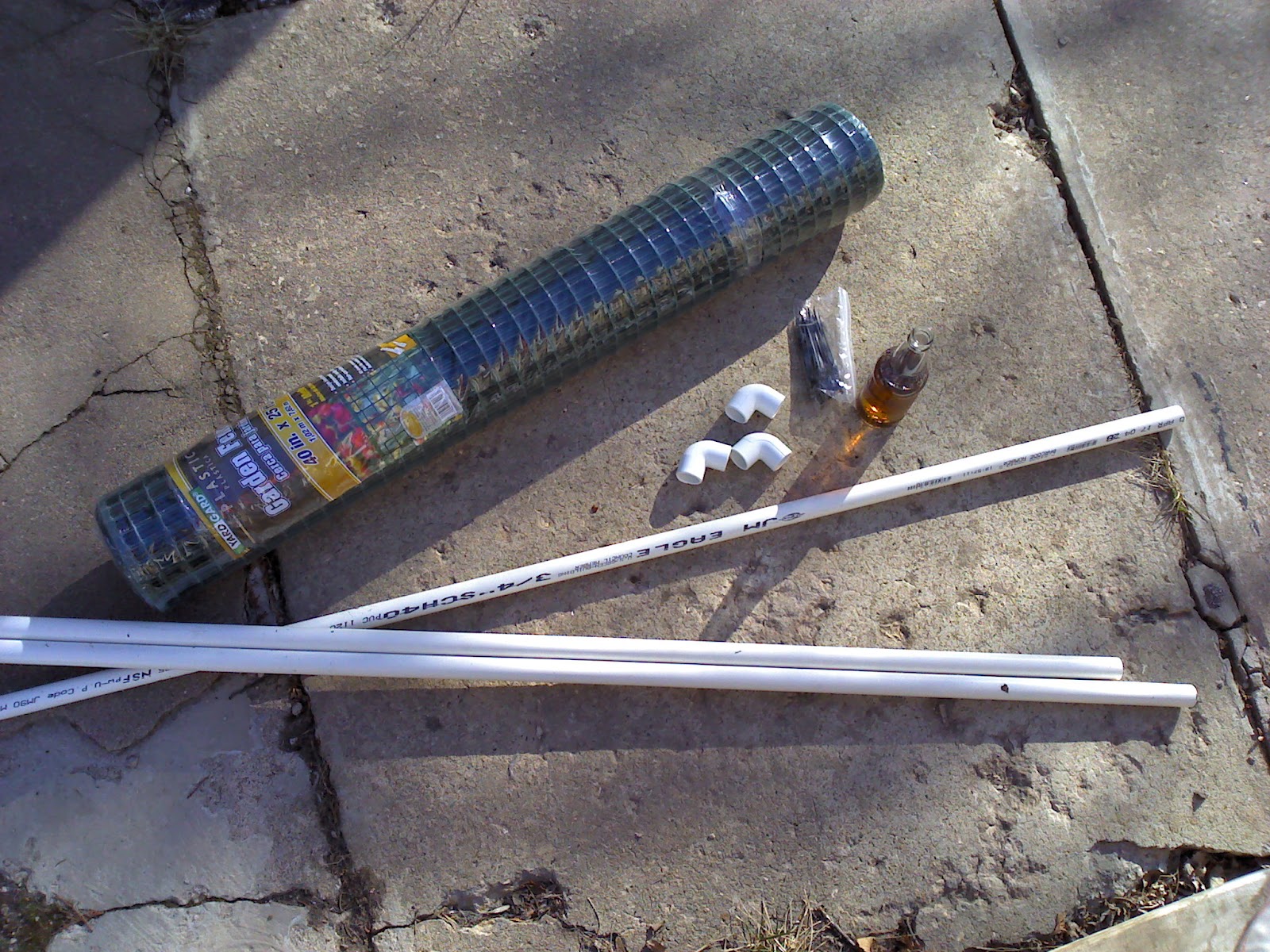
Zip tie the fencing to the PVC frame.


Pound the 2' rebar 1' into the ground where you want the lattice to go.
Put the lattice on the rebar stakes.
Put the lattice on the rebar stakes.


These are easily replaceable, repairable, and they look great.
Saturday, January 7, 2012
Books of 2011
In 2011, I set out to read one book per month, and from that small goal I launched into an average of 4 books per month completing 48 books in the year 2011. Some were great, some were mediocre, and some I wouldn't recommend, but I learned from each of them. Here is my list of books:
The Millionaire Next Door, Thomas J. Stanley and William D. Danko
War of the Worlds, H.G. Wells
Henry Ford's Own Story, Rose Wilder Lane
How to Write Science Fiction & Fantasy, Orson Scott Card
The Aspen Experiments, Corrie Garrett
Who Moved My Cheese? Spencer Johnson
The Art of War, Sun Tzu
The Twelfth Imam, Joel Rosenberg
When Helping Hurts, Corvett & Fikkert
Why E=MC^2, Brian Cox and Jeff Forshaw
Old Man's War, John Scalzi
The Dip, Seth Godin
4 Hour Work Week, Tim Ferriss
4 Hour Body, Tim Ferriss
Flatland, Edwin Abbott Abbott
Coffee: A guide to buying, brewing, and enjoying, Kenneth Davids
Simple Church, Sam Rainer, Eric Geiger and Grover Gardner
Agent to the Stars, John Scalzi
QBQ! John MIller
The Time Machine, H G Wells
The Gerson Therapy, Charlotte Gerson and Beata Bishop
Seventh Son, Orson Scott Card
Red Prophet, Orson Scott Card
Prentice Alvin, Orson Scott Card
Alvin Journeyman, Orson Scott Card
Heartfire, Orson Scott Card
The Crystal City, Orson Scott Card
Sacred Marriage, Gary Thomas
A Celebration of Sex, Douglas Rosenau
Eternity in Their Hearts, Don Richardson
Secrets of the Koran, Don Richardson
Competent to Counsel, Jay Edward Adams
What Kids Need Most in a Dad, Tim Hansel
Tipping Point, Malcolm Gladwell
The Magician's Nephew, CS Lewis
The Lion, the Witch, and the Wardrobe, CS Lewis
The Horse's Boy, CS Lewis
Prince Caspian, CS Lewis
How to Win Friends and Influence People, Dale Carnegie
Water, Pure and Simple, Paolo Consigli
Wild at Heart, John Eldredge
Autobiography of Andrew Carnegie, Andrew Carnegie
21 Irrefutable Laws of Leadership, John Maxwell
The Hunger Games, Suzanne Collins
EntreLeadership, Dave Ramsey
Catching Fire, Suzanne Collins
Game of Thrones, George Martin
Mockingjay, Suzanne Collins
The Millionaire Next Door, Thomas J. Stanley and William D. Danko
War of the Worlds, H.G. Wells
Henry Ford's Own Story, Rose Wilder Lane
How to Write Science Fiction & Fantasy, Orson Scott Card
The Aspen Experiments, Corrie Garrett
Who Moved My Cheese? Spencer Johnson
The Art of War, Sun Tzu
The Twelfth Imam, Joel Rosenberg
When Helping Hurts, Corvett & Fikkert
Why E=MC^2, Brian Cox and Jeff Forshaw
Old Man's War, John Scalzi
The Dip, Seth Godin
4 Hour Work Week, Tim Ferriss
4 Hour Body, Tim Ferriss
Flatland, Edwin Abbott Abbott
Coffee: A guide to buying, brewing, and enjoying, Kenneth Davids
Simple Church, Sam Rainer, Eric Geiger and Grover Gardner
Agent to the Stars, John Scalzi
QBQ! John MIller
The Time Machine, H G Wells
The Gerson Therapy, Charlotte Gerson and Beata Bishop
Seventh Son, Orson Scott Card
Red Prophet, Orson Scott Card
Prentice Alvin, Orson Scott Card
Alvin Journeyman, Orson Scott Card
Heartfire, Orson Scott Card
The Crystal City, Orson Scott Card
Sacred Marriage, Gary Thomas
A Celebration of Sex, Douglas Rosenau
Eternity in Their Hearts, Don Richardson
Secrets of the Koran, Don Richardson
Competent to Counsel, Jay Edward Adams
What Kids Need Most in a Dad, Tim Hansel
Tipping Point, Malcolm Gladwell
The Magician's Nephew, CS Lewis
The Lion, the Witch, and the Wardrobe, CS Lewis
The Horse's Boy, CS Lewis
Prince Caspian, CS Lewis
How to Win Friends and Influence People, Dale Carnegie
Water, Pure and Simple, Paolo Consigli
Wild at Heart, John Eldredge
Autobiography of Andrew Carnegie, Andrew Carnegie
21 Irrefutable Laws of Leadership, John Maxwell
The Hunger Games, Suzanne Collins
EntreLeadership, Dave Ramsey
Catching Fire, Suzanne Collins
Game of Thrones, George Martin
Mockingjay, Suzanne Collins
Saturday, April 16, 2011
How to make a garden
Making a garden is fairly simple and immensely rewarding.
First come up with a plan:

It's ok if the plan changes, but make it specific enough to come up with a bill of materials (sku numbers are Home Depot numbers if you want to look them up online):
Materials
HD cheap chicken fence ($24 for 3’x50’) steel $24.00 sku274666
Post lumber $42.00 sku257974
Box lumber $24.00 sku167929
Quick drying concrete $15.00 sku169765
Staples $2.00
Gate pieces (hinges and latch) $15.00 sku863475
Tools
Fence post hole digger $0(borrow)
Staple gun $20
level $5.00
Make sure to have the Home Depot guys do all the wood cutting for you. Measure, then measure, then dig the holes (2 ft deep for mine), then measure, then cement the posts in. Notice the measuring. If you don't take this advice, your fence will forever be a foot off (hypothetically speaking of course). Staple the chicken wire to the fence (doing this in the cold without a staple gun is a miserable experience you don't want).

Measure. If you mess up the gate, you will remember it every time you enter the garden. Measuring is important. Drill and screw the gate frame together, and attach it to the posts.

Next make the framing for the garden sections. I did 4 boxes measuring 4 feet square. Screw them together, and for now, pin them in place with stakes. Renting the rototiller did not go well for me, so either use the tool right, or skip that step, we'll bypass it in a minute anyway.

Here's the part where you can cheat. In the back you can see the stuff I'm growing inside (short little things, sadly, most probably won't make it out of the ground). All the stuff in the front, I bought as you see it on the table.

Next, prepare the ground. Since I failed with the tiller, I bought some top soil (literally dirt cheap, unlike potting soil). Put down newspaper to block weeds and grass from coming up, then cover that with 4+ inches of top soil. Water it. I have yet to see if this will really work, come summer, I'll let you know. Benjamin Franklin said it was a good idea.

Here's the only picture of me actually working on the garden. My top soil was a little clay-like, so I spent a few hours breaking it up by hand.

Next, plant the plants and water them. On the right, potatoes. On the left, mini narcissus (daffodil) , kees nelis (tulip), kikowachi (tulip), lucky strike (tulip), and grape hyacinth (cool looking something-or-other).

Here I have (listed near to far) onion, garlic, broccoli, carrots, spinach, lettuce, and strawberries. I have yet to plant the warmer weather plants: zucchini, butternut squash, yellow squash, cucumber, bell pepper, and tomatoes.

Enjoy the garden. I go sit in the swing and listen to the birds when I need some peace and quiet (provided the neighbor dogs aren't out). I'm seeing growth already, and I'm only a week or two in. In a few months I should be able to start harvesting the early fruits.
First come up with a plan:

It's ok if the plan changes, but make it specific enough to come up with a bill of materials (sku numbers are Home Depot numbers if you want to look them up online):
Materials
HD cheap chicken fence ($24 for 3’x50’) steel $24.00 sku274666
Post lumber $42.00 sku257974
Box lumber $24.00 sku167929
Quick drying concrete $15.00 sku169765
Staples $2.00
Gate pieces (hinges and latch) $15.00 sku863475
Tools
Fence post hole digger $0(borrow)
Staple gun $20
level $5.00
Make sure to have the Home Depot guys do all the wood cutting for you. Measure, then measure, then dig the holes (2 ft deep for mine), then measure, then cement the posts in. Notice the measuring. If you don't take this advice, your fence will forever be a foot off (hypothetically speaking of course). Staple the chicken wire to the fence (doing this in the cold without a staple gun is a miserable experience you don't want).

Measure. If you mess up the gate, you will remember it every time you enter the garden. Measuring is important. Drill and screw the gate frame together, and attach it to the posts.

Next make the framing for the garden sections. I did 4 boxes measuring 4 feet square. Screw them together, and for now, pin them in place with stakes. Renting the rototiller did not go well for me, so either use the tool right, or skip that step, we'll bypass it in a minute anyway.

Here's the part where you can cheat. In the back you can see the stuff I'm growing inside (short little things, sadly, most probably won't make it out of the ground). All the stuff in the front, I bought as you see it on the table.

Next, prepare the ground. Since I failed with the tiller, I bought some top soil (literally dirt cheap, unlike potting soil). Put down newspaper to block weeds and grass from coming up, then cover that with 4+ inches of top soil. Water it. I have yet to see if this will really work, come summer, I'll let you know. Benjamin Franklin said it was a good idea.

Here's the only picture of me actually working on the garden. My top soil was a little clay-like, so I spent a few hours breaking it up by hand.

Next, plant the plants and water them. On the right, potatoes. On the left, mini narcissus (daffodil) , kees nelis (tulip), kikowachi (tulip), lucky strike (tulip), and grape hyacinth (cool looking something-or-other).

Here I have (listed near to far) onion, garlic, broccoli, carrots, spinach, lettuce, and strawberries. I have yet to plant the warmer weather plants: zucchini, butternut squash, yellow squash, cucumber, bell pepper, and tomatoes.

Enjoy the garden. I go sit in the swing and listen to the birds when I need some peace and quiet (provided the neighbor dogs aren't out). I'm seeing growth already, and I'm only a week or two in. In a few months I should be able to start harvesting the early fruits.
Wednesday, March 16, 2011
Contemplations of Food Poisoning
My wife was out of town, and I usually ate dinner after an hour and a half of Aikido practice. On my way home I bought some spices, nuts, strawberries, yogurt, and milk. I spent a good bit of time in the kitchen making a mix for a test coffee to try in the morning when I realized it was well past dinner time. I planted a few of the strawberry seeds and sliced up the rest on top of yogurt: quick dinner.
I woke up just before midnight and barely made it to the toilet in time to empty my stomach. Confused and a little dazed, I cleaned up and went back to bed--only to return in a few minutes. I called my wife, and after hearing me dry heave a few times she called a friend of ours to be there (and take me to the hospital if the situation didn't improve).
Mike arrived in time for another hour and a half of puke (water and any remaining bile) and diarrhea. He encouraged me to keep drinking water, and eventually the dry heaves were more than 15 minutes apart--I was so exhausted that I slept on the bathroom floor between vomits.
I switched to Gatorade when I knew some of it would be ingested, and around 2:30, I went to sleep for the remainder of the night.
I called in sick Wednesday. The day was filled with sleeping, watching environmentalist documentaries, and trying to get food and liquid to stay down. Fortunately, I only lost my lunch once. I had a few mostly lucid thoughts throughout the whole ordeal.
Strawberries. My first thought is that strawberries shouldn't cause such long lasting pain and suffering. They're a very tasty treat that I purchase rarely due to price and availability.
Breathing. It's amazing how little control you have over anything when you're dry heaving into a toilet bowl. First I tried to stop the heaving--no luck. Second, I tried controlling my breathing (ie. actually taking breaths) with only a little success. Helplessness is a harsh teacher.
The ER. We decided that it'd be ok to go to urgent care, but they close at midnight. We decided to wait and see if I came near death before going to the ER (I was anyway). I went there last summer from a major concussion and received very sluggish and unhelpful care. I suppose their definition of emergency is a bit different than mine.
Loneliness. Human interaction is vital to recovery. Talking to Becca on the phone was helpful--I didn't feel like a sickly man dying alone in a house. I had more hope when Mike arrived. We didn't talk much, but just knowing that if I went unconscious--he would do something--was reassuring.
I woke up just before midnight and barely made it to the toilet in time to empty my stomach. Confused and a little dazed, I cleaned up and went back to bed--only to return in a few minutes. I called my wife, and after hearing me dry heave a few times she called a friend of ours to be there (and take me to the hospital if the situation didn't improve).
Mike arrived in time for another hour and a half of puke (water and any remaining bile) and diarrhea. He encouraged me to keep drinking water, and eventually the dry heaves were more than 15 minutes apart--I was so exhausted that I slept on the bathroom floor between vomits.
I switched to Gatorade when I knew some of it would be ingested, and around 2:30, I went to sleep for the remainder of the night.
I called in sick Wednesday. The day was filled with sleeping, watching environmentalist documentaries, and trying to get food and liquid to stay down. Fortunately, I only lost my lunch once. I had a few mostly lucid thoughts throughout the whole ordeal.
Strawberries. My first thought is that strawberries shouldn't cause such long lasting pain and suffering. They're a very tasty treat that I purchase rarely due to price and availability.
Breathing. It's amazing how little control you have over anything when you're dry heaving into a toilet bowl. First I tried to stop the heaving--no luck. Second, I tried controlling my breathing (ie. actually taking breaths) with only a little success. Helplessness is a harsh teacher.
The ER. We decided that it'd be ok to go to urgent care, but they close at midnight. We decided to wait and see if I came near death before going to the ER (I was anyway). I went there last summer from a major concussion and received very sluggish and unhelpful care. I suppose their definition of emergency is a bit different than mine.
Loneliness. Human interaction is vital to recovery. Talking to Becca on the phone was helpful--I didn't feel like a sickly man dying alone in a house. I had more hope when Mike arrived. We didn't talk much, but just knowing that if I went unconscious--he would do something--was reassuring.
Monday, March 7, 2011
How to make a bed frame
1. Make a list of supplies
Slats (full size 54"): 50" x 10, 1x3s
Width bar: 42" x 2, 2x6s
Length bar (full size 75"): 70" x 2, 2x6s
Legs: 24" x 4, 4x4s
Screws: 3" #10 x 8 and 2" #10 x A_lot
2. Get the supplies from Home Depot
Make sure to have the guys at Home Depot do all the cutting and measuring, it makes everything else easier. Explain what you're trying to do and ask for suggestions on improvements while keeping the cost low. Remember, you can do it, they can help--thanks John.
3. Put the pieces on the floor

4. Put together the frame

5. Measure to make sure it's square

6. Screw on the slats

7. Flip it and add legs

8. Admire your handiwork

9. Sweep, put away tools, and put the bed on the frame

10. Sleep.
Enjoy your new bed frame.
Saturday, February 5, 2011
When Helping Hurts (Review)
I stayed up late last night finishing up a book called When Helping Hurts by Steve Corbett and Brian Fikkert. I surprised myself staying up reading it because the first third of the book much like a long drawn out painful memory.
 The first third defines poverty--not only material/financial poverty but poverty of the soul. Growing up in Indonesia, I saw first hand what poverty looks like. I talked with people who had a complete lack of hope. I played with their children as peers. The description of poverty in this book is good, but no description can compare with seeing it--and no amount of seeing can compare with experiencing it (which I have not).
The middle third of the book deals with general guidelines on how to help the materially impoverished without doing more harm than good. One of the main concepts that I gathered from this section was the difference between relief, rehabilitation, and development. If you provide one of those three at an inappropriate time or quantity, further damage can be done. It's also very important to empower the materially poor to organize and implement their own way out--which helps to rehabilitate their emotional poverty. There's quite a bit of discussion on that point (and the others I've mentioned), but this is meant to be a short review.
Practical actions fall into the final third. Short term missions take up a chapter, but the authors take the view that short term missions more often do more harm than good--based on the principles and nature of poverty outlined in the first 2/3 of the book. "For the first time in US history, more poor people live in suburbs than in cities." Building relationships, teaching finance, and enabling people to have the self-confidence to move forward are key in alleviating poverty in our own back yard. The authors spend a bit of time covering the various micro-loan or small-business seed loaning that now takes place around the world--enabling the materially poor to start their own businesses out from under the thumb of malicious loan sharks.
Steve Corbett and Brian Fikkert did a great job explaining what poverty looks like, where it comes from, and how it can be helped. They also did a great job outlining the dangers of certain types of relief currently in use and the long term negative impact they have on society. This book is definitely on my must read list.whenhelpinghurts.org
Monday, January 17, 2011
The Millionaire Next Door (Review)
I did a good bit of reading over the Christmas break, and my younger brother bought me The Millionaire Next Door, by Thomas Stanley and William Danko. I was surprised that it only took a week to read 245 pages. The book did a great job painting a picture of what the average millionaire looks like--nothing at all like the picture Hollywood paints. Here are a few quotes that I have highlighted:
"Wealth is more often the result of a lifestyle of hard work, perseverance, planning, and most of all, self-discipline."
"Multiply your age times your realized pretax annual household income from all sources except inheritances. Divide by ten. This, less any inherited wealth, is what your net worth should be."
"It's easy for Dr. South to say he wants to accumulate wealth, but his actions speak much louder than his words."
"What types of motor vehicles do millionaires drive?... 1. Ford. The most popular models include the F-150 pickup and the Explorer sports utility vehicle."
"Whatever your income, always live below your means."
"Yet many parents still think that their wealth can automatically transform their children into economically productive adults. They are wrong. Discipline and initiative can't be purchased like automobiles or clothing off a rack."
"Courage can be developed. But it cannot be nurtured in an environment that eliminates all risks, all difficulty, all dangers."
"Those who attempt to shelter their children from every conceivable germ in our society... never really inoculated them from fear, worry, and the feeling of dependency. Not at all."
"I am in control of my own destiny.
Risk is working for a ruthless employer.
I can solve any problem.
The only way to become a CEO is to own the company.
There are no limits on the amount of income I can make.
I get stronger and wiser every day by facing risk and adversity."
"Who has less fear and worry? ...Typically, it's the entrepreneur, the person who deals with risk every day, who tests his or her courage every day. In this way he learns to conquer fear."
Saturday, January 15, 2011
2011 Plan
23 years have passed me by, and I only ever had a vague plan for what I would do in those years. This year, I decided to set some solid goals for myself. I don't want to be the same person next year that I am right now, so here are the general categories of my goals for 2011 (I'll spare you the detailed goals and how I'm checking myself):
Gardening: Now that I have a back yard, I have the potential to eat food that I have grown myself. In order to make that a reality, I need to plan a garden, build it, plant it, cultivate it, and harvest the fruits.
Physical: I consider myself to be in decent shape, but in order to keep it that way, I need to develop good healthy habits. I need to exercise at three times a week, stretch, and eat healthy foods.
Innovation: Crazy inventive thoughts breed more crazy inventive thoughts. In an attempt not to lose that creativeness, I plan on putting at least one crazy idea into action--building a laser, solar heater, or water engine would do the trick.
Spiritual: Relationships need to be intentional, and I need to be more intentional about my relationship with Jesus. Time is precious, but in the middle of my crazy schedules, Jesus is the only relationship I cannot lose.
Marriage: I married a wonderful woman. Unfortunately we're both human, and I need to put forth effort to build up our relationship--this takes many forms.
Finance: At the moment, I'm not a free man financially. I owe a great deal to a number of organizations who loaned me money to go to school. I need to be responsible with the money I have to provide for my wife and buy my freedom back from these organizations.
Personal growth does not happen by accident--neither does maturity. Sometimes we luck out and grow because of someone else's choices or the circumstances that we somehow find ourselves in. For me, I'll plan on growing and execute the plan too.
Friday, January 7, 2011
The Adventure
So glad you stayed tuned (or for tuning back in) for the rest of the story.
My wife and I got up at 6:30 on Saturday, Dec 18 and left the house an hour later. The car was packed to the brim with a dog kennel, suitcase, bags, Christmas presents, skis, shoes, snacks, a couple dogs, and a married couple (that'd be my wife and I). We drove South to Iowa City, and then due West along I-80 stopping for bathroom breaks, gas, and snacks along the way.
The first leg of our journey was to be 1507 miles and (according to the all knowing maps) should have taken 23 hours 31 minutes. Unfortunately, we had to stop for the reasons mentioned previously and the blizzard blowing across Wyoming introduced me to one of the most terrifying few seconds of my driving life.
We passed the time by talking, listening to podcasts (Dave Ramsey, Ravi Zacharias, Dan Miller, Car Talk, Matt Chandler), and audio books (Lone Star Planet, War of the Worlds). It only took us 32 hours to get to Nampa, Idaho, where my parents live, and we were a lot more exhausted than we had planned to be. If you're the learning type, learn this: for a 23 and 31 minute drive, plan to stop in a hotel--especially when blizzards are afoot.
There's no time for tiredness at my family's house, so we got right to the business of having fun: hot springs swimming, snow angel (in swim trunks) making, mountain cabin renting, snow shoeing, skiing, snow sculpting, caroling, partying, downhill sledding, baking, board gaming, snowball fighting, coffee drinking, puzzle assembling, sister's knee surgery-ing... those 6 days were packed with years worth of memories.
Leg 2 of the adventure began, and we piled the cargo, dogs, and snacks back in the car for an estimated 1608 miles in 26 hours. We had the presence of mind at that point to get a hotel in Denver, Colorado. A few car wrecks in Utah reminded us to drive carefully, but after Wyoming, it was smooth sailing. We listened to more podcasts and audiobooks (The Autobiography of Benjamin Franklin and Henry Ford's Own Story), and soon we arrived in Watauga, Texas--home of my in-laws.
Becca has two sisters, each sister is married and between the two of them 5 children between the ages of 0 and 8 consumed the energy of all the adults in the household. We cooked food, watched How to Train Your Dragon, played Balderdash, told jokes, read books (The Millionaire Next Door), watched Despicable Me, took family photos, opened presents, and went on a triple date to see Tron Legacy. I'm just glad my in-laws and I get along so well, and a week with them was far too short.
The journey must go on though, so we packed up the car and drove 870 miles North-East (14 hours and 17 minutes) and arrived at our clean house late in the evening on the 3rd of January. We arrived just in time for me to get a rather nasty stomach bug (still not quite done with it). It was a wonderful Christmas, but I think I'm ready for a regular schedule again.
Friday, December 17, 2010
Adventure
Tomorrow the journey begins: 4000 miles across the continent. Stay tuned for the adventure.
Friday, December 10, 2010
Creating a Podcast
Contrary to popular belief, I have not been deficient in the upkeep of my online presence since August--even if that was the last time I posted here. An idea was born, and I have been carefully nurturing it to grow to it's current state. The idea's name: theWordStream.
I really like my job as a software engineer. I experience challenges, problem solving, teamwork, successes, and learning--all things that I hope to keep in any profession that I set my mind to. However, my life was somewhat lacking in one area in particular--that is, the study of God's Word.
I wanted more than simply reading the Bible every morning and wondering what certain words meant--so I'd look them up in Greek or Hebrew. I wanted to know more background about people and places in the Bible--so I picked up a commentary. I wanted to really learn it and have some measure of accountability to keep me in the Word regularly, so I began to teach it. The idea of turning it into a podcast was probably a direct result of listening to Dave Ramsey, Dan Miller, and Zig Ziglar all in one morning run.
With a little headphone mic and recording software called Audacity, I recorded the introduction to the gospel according to Luke and promptly deleted it. I started over by writing a script and then kept the resulting recording. With the support of my wife and parents, I created a name and bought the domain for a couple dollars, but I didn't publish anything online until I had feedback from some of my friends.
Now the website is up with the introduction to Luke and chapter 1. Soon, I hope to get it into the itunes directory and out into the open seas of the internet. My system is in place, and I'll be releasing a new chapter each week. If it goes as planned, I'll write up a study guide from my notes as a companion for Bible study groups.
Maybe some day, I'll read, study, and teach all day, every day.
Friday, August 27, 2010
Cheap & Free Stuff
A lot of newly graduated people go out and stock their apartments or houses with all matching stuff and dig themselves in debt so they can look and/or feel successful.
Some stuff is necessary for living, but I'm not above garage sales and curbside giveaways for the rest. I'm getting a reputation at work for getting all kinds of free stuff, and Becca and I started listing all the free or really cheap stuff we bought or accepted in the last year. It's really not difficult to get a large variety of free and cheap stuff to stock a house until you can save up for the matching stuff. After all, it's just stuff:
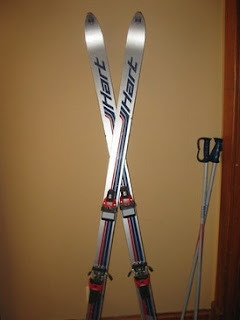 Skis: $20
I bought them post-season. I'll be looking at boots for them today...
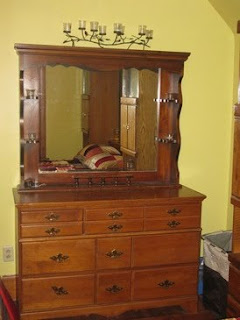 Mirror: $0
A coworker sold the original dresser and the buyer didn't want the mirror, so I got it for free. Thanks Soccermom.
I know the wood isn't quite the right shade, but we were going to stain the dresser darker some day anyway.
 Rental House: $740/mo
It's 2 blocks from work. I heard about it when I was buying my friend;s white car.
 White Car: $800
Bought from a friend with too many cars. I needed a car since Becca would be starting school (her car is the red one). Thanks Al.
Black Car: $100
Someone was moving and didn't want to deal with a deadbeat. I jumped it and drove it 20 miles home. Now I want to sell it for closer to what it's worth. Thanks Impatientpeople.
 Swing: $0
A friend of mine at work gave me this swing while I was picking up a free grill from his house. Thanks David.
 Dining Room Table: $0
Becca's grandfather gave it to us. Thanks Papa.
Sewing Desk & Chair: $35
Someone at work didn't want this desk at home. I happened to be in the market. Tying it to the back of my little car was fun. Thanks Guywithatinydesk.
 Server: $0
A friend needed help merging to computers together and I volunteered to help him out. After merging this one and a newer one together, he gave me the old one. Thanks Al.
I have since installed Ubuntu 10.04 Server on it and use it as my home server.
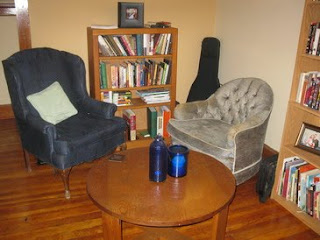 Chair (left): $0
This was a curbside giveaway, and after much cleaning, it's my favorite reading chair. Thanks Oldguyattheendofthestreet.
Chair (right): $0
Becca's dorm room chair given to her by one of her sister. Thanks Cory or Lissa.
Coffee Table: $(bag of candy)
Some guys at work offered it to the first person to give them a bag of candy. I was quick.
 Bed: $0
A lady at Becca's church didn't want a king size water-bed frame, towers, dimmer lights, and a mattress anymore, so she gave it to the newlyweds.
 Grill: $0
Given to us by a friend who's moving to Colorado. Thanks David.
 TV: $50
Coworker was upgrading everything to high definition. Thanks Overzealousman.
Entertainment Center: $20
Coworker's wife didn't like it.
Sony Stereo System: $10
Gathered dust for years in a coworker's garage.
Coffee Table: $0
A friend wanted to upgrade, claiming this one was old.
Couch: $0
My old boss got a new couch. We usually have a slip cover on it, but we paid retail for the cover. Thanks Marc.
My point? Be patient and get free stuff. Be a little impatient and get cheap stuff. We're in the most wealthy nation on earth, and people throw out all kinds of great stuff. I'm not saying you can't have nice new stuff, but until you can put down cash for it, get the nice free stuff. After all, it's just stuff.
Some stuff is necessary for living, but I'm not above garage sales and curbside giveaways for the rest. I'm getting a reputation at work for getting all kinds of free stuff, and Becca and I started listing all the free or really cheap stuff we bought or accepted in the last year. It's really not difficult to get a large variety of free and cheap stuff to stock a house until you can save up for the matching stuff. After all, it's just stuff:
 Skis: $20
I bought them post-season. I'll be looking at boots for them today...
 Mirror: $0
A coworker sold the original dresser and the buyer didn't want the mirror, so I got it for free. Thanks Soccermom.
I know the wood isn't quite the right shade, but we were going to stain the dresser darker some day anyway.
 Rental House: $740/mo
It's 2 blocks from work. I heard about it when I was buying my friend;s white car.
 White Car: $800
Bought from a friend with too many cars. I needed a car since Becca would be starting school (her car is the red one). Thanks Al.
Black Car: $100
Someone was moving and didn't want to deal with a deadbeat. I jumped it and drove it 20 miles home. Now I want to sell it for closer to what it's worth. Thanks Impatientpeople.
 Swing: $0
A friend of mine at work gave me this swing while I was picking up a free grill from his house. Thanks David.
 Dining Room Table: $0
Becca's grandfather gave it to us. Thanks Papa.
Sewing Desk & Chair: $35
Someone at work didn't want this desk at home. I happened to be in the market. Tying it to the back of my little car was fun. Thanks Guywithatinydesk.
 Server: $0
A friend needed help merging to computers together and I volunteered to help him out. After merging this one and a newer one together, he gave me the old one. Thanks Al.
I have since installed Ubuntu 10.04 Server on it and use it as my home server.
 Chair (left): $0
This was a curbside giveaway, and after much cleaning, it's my favorite reading chair. Thanks Oldguyattheendofthestreet.
Chair (right): $0
Becca's dorm room chair given to her by one of her sister. Thanks Cory or Lissa.
Coffee Table: $(bag of candy)
Some guys at work offered it to the first person to give them a bag of candy. I was quick.
 Bed: $0
A lady at Becca's church didn't want a king size water-bed frame, towers, dimmer lights, and a mattress anymore, so she gave it to the newlyweds.
 Grill: $0
Given to us by a friend who's moving to Colorado. Thanks David.
 TV: $50
Coworker was upgrading everything to high definition. Thanks Overzealousman.
Entertainment Center: $20
Coworker's wife didn't like it.
Sony Stereo System: $10
Gathered dust for years in a coworker's garage.
Coffee Table: $0
A friend wanted to upgrade, claiming this one was old.
Couch: $0
My old boss got a new couch. We usually have a slip cover on it, but we paid retail for the cover. Thanks Marc.
My point? Be patient and get free stuff. Be a little impatient and get cheap stuff. We're in the most wealthy nation on earth, and people throw out all kinds of great stuff. I'm not saying you can't have nice new stuff, but until you can put down cash for it, get the nice free stuff. After all, it's just stuff.
Saturday, August 7, 2010
Thoughts Continued
The word curious is rather curious. Kuri-\es, curi-\es, and kiuri-\es (schwas). How do teachers explain this word? "When there's a 'c' followed by a 'urious', the 'c' make a 'kiu' sound." (curry, curtain, and curse make a 'ku' not a 'kiu'). This is similar to the sound difference between queen and queue. Apparently the 'que' in queen is like 'kui' and the 'que' in queue is like 'kiu'.
Rockwell Collins
More Unity
More Diversity
More Tasty
Try our new edible ARC-210.
"Melts in your mouth, not in your joint strike fighter."
That's why I'm not in marketing.
Robert,
I noticed your IM quote:
"Software is a structure--not a plant; it ought to be designed--not grown."
and was curious about a couple of things:
Greg
RE: Your quote
This quote came from my frustration at some code I had to write tests for. It was apparent that multiple engineers had added functionality over several years--an extra switch statement here, another if and flag there. That code was grown. I had to write tests for another kind of code a few weeks before seeing the grown code. It was organized, planned, and well structured. The if statements weren't there because of last minute exceptions to the rule, they were there because of a planned flow of control. That code has a blueprint somewhere, and I happen to know that it followed the blueprint closely. That code was designed.
Some code grows to fill in the gaps and reach for the sunlight, but I'd much prefer to work within a structure that can hold itself up even when the sun isn't shining.
------------------------------------
Rockwell Collins
More Unity
More Diversity
More Tasty
Try our new edible ARC-210.
"Melts in your mouth, not in your joint strike fighter."
That's why I'm not in marketing.
------------------------------------
Robert,
I noticed your IM quote:
"Software is a structure--not a plant; it ought to be designed--not grown."
and was curious about a couple of things:
- How is software "a structure?"
- What is the difference between "designed" and "grown?"
Greg
RE: Your quote
This quote came from my frustration at some code I had to write tests for. It was apparent that multiple engineers had added functionality over several years--an extra switch statement here, another if and flag there. That code was grown. I had to write tests for another kind of code a few weeks before seeing the grown code. It was organized, planned, and well structured. The if statements weren't there because of last minute exceptions to the rule, they were there because of a planned flow of control. That code has a blueprint somewhere, and I happen to know that it followed the blueprint closely. That code was designed.
Some code grows to fill in the gaps and reach for the sunlight, but I'd much prefer to work within a structure that can hold itself up even when the sun isn't shining.
Saturday, July 17, 2010
Observations
This is the first of (hopefully) may posts consisting of my more random thoughts and observations that I would normally tell to the Co-op in the cube next to me. He will be leaving in August, so I am redirecting my random information outlet here. These are the things that make me chuckle during the week. I can only hope they do the same for you.
Manipulating the premise will never lead to successful scrutiny if in the end, your assertions fail.
"Could, would, should, but didn't." I've been reading Linchpin by Seth Godin, and he has a graph depicting this problem. The problem goes much much deeper: these words are terribly spelled. They ought to be spelled kud, wud, and shud.
Some programs have layers, one class has a function initialize() that calls another class's doInitialize() that calls another class's no_reallyDoInitiallize() that calls another class's actuallyGoingToInitialize() function. This may seem extreme at first glance--that's because it is.
I was walking down the hall when I caught some conversation as I passed between two engineers. The short woman said, "..so she literally walked down to the office, I mean literally went down there and talk to them about..." I suppose she figuratively walks down there most of the time.
"What does vested interest really mean?"
"It means it's important. A vest is decorative suit-like garment worn to important or prestegious events. You have clothed your interests with the intent of importance."
"Really?"
"No."
Manipulating the premise will never lead to successful scrutiny if in the end, your assertions fail.
"Could, would, should, but didn't." I've been reading Linchpin by Seth Godin, and he has a graph depicting this problem. The problem goes much much deeper: these words are terribly spelled. They ought to be spelled kud, wud, and shud.
Some programs have layers, one class has a function initialize() that calls another class's doInitialize() that calls another class's no_reallyDoInitiallize() that calls another class's actuallyGoingToInitialize() function. This may seem extreme at first glance--that's because it is.
I was walking down the hall when I caught some conversation as I passed between two engineers. The short woman said, "..so she literally walked down to the office, I mean literally went down there and talk to them about..." I suppose she figuratively walks down there most of the time.
"What does vested interest really mean?"
"It means it's important. A vest is decorative suit-like garment worn to important or prestegious events. You have clothed your interests with the intent of importance."
"Really?"
"No."
Friday, June 18, 2010
Soccer and Sickness
Today is a good day to sit at home and sip chicken soup. Two days of throat irritation bloomed into full sinus congestion overnight--with more thorns than petals. We had blue skies until this evening when the rain swept by in sheets and the sound of distant thunder lulled me into an early-evening nap.
Wednesday was far more interesting. The Rockwell Collins Soccer (summer) League kicked off, and I was on a new team from the spring league. Caleb and David joined the team, so they weren't all strangers. I met all the players, and we played a hard game against team 4 (not the most original of team names). In the second half I played sweeper, and as they fell behind 3 to 0, team 4 slipped into desperation. With only two minutes left in the game, one of their main strikers ran towards me, and I turned to keep ahead of him--his footing shifted. Crack. For a second everything was black; I felt my knees hit the ground. I stood and collapsed again, everything was blurry. I heard myself yell for a substitute somewhere in the muted distance as I stumbled towards a greenish blue horizon. With help I made it to the sidelines and fell to my hands and knees, gasping for breath.
Once I regained breathing control (lost partly from pain and partly from fury), Caleb and Stephanie took Becca and I to the emergency room to have my neck/skull looked at. The doctor didn't diagnose a concussion, and my brain is as ok as it has been. It'll take more than an intentional elbow to the the base of the skull to stop me.
Wednesday was far more interesting. The Rockwell Collins Soccer (summer) League kicked off, and I was on a new team from the spring league. Caleb and David joined the team, so they weren't all strangers. I met all the players, and we played a hard game against team 4 (not the most original of team names). In the second half I played sweeper, and as they fell behind 3 to 0, team 4 slipped into desperation. With only two minutes left in the game, one of their main strikers ran towards me, and I turned to keep ahead of him--his footing shifted. Crack. For a second everything was black; I felt my knees hit the ground. I stood and collapsed again, everything was blurry. I heard myself yell for a substitute somewhere in the muted distance as I stumbled towards a greenish blue horizon. With help I made it to the sidelines and fell to my hands and knees, gasping for breath.
Once I regained breathing control (lost partly from pain and partly from fury), Caleb and Stephanie took Becca and I to the emergency room to have my neck/skull looked at. The doctor didn't diagnose a concussion, and my brain is as ok as it has been. It'll take more than an intentional elbow to the the base of the skull to stop me.
Subscribe to:
Posts (Atom)